Sound Baths and Sleep: What Does the Research Say?
Many guests come to a sound bath for one reason: they haven’t been sleeping well. So does sound actually help? The honest answer is there are some good signs, but not enough to call it a treatment. Here’s what the research shows.
Key studies
| Study | Design | Main finding | Certainty |
|---|---|---|---|
| Cochrane review on music for insomnia (2022) | 13 randomised trials, about 1,000 adults | Music improved self-rated sleep quality | Moderate |
| Goldsby et al. (2017) | Observational, 62 people, no control group | Participants reported less tension, fatigue and low mood after singing bowl meditation | Low |
| Stanhope and Weinstein (2020) | Systematic review of singing bowls | Not enough evidence to recommend bowls as therapy | Low |
Sources: Cochrane 2022 · Goldsby 2017 · Stanhope 2020.
Why do so many people fall asleep in a session?
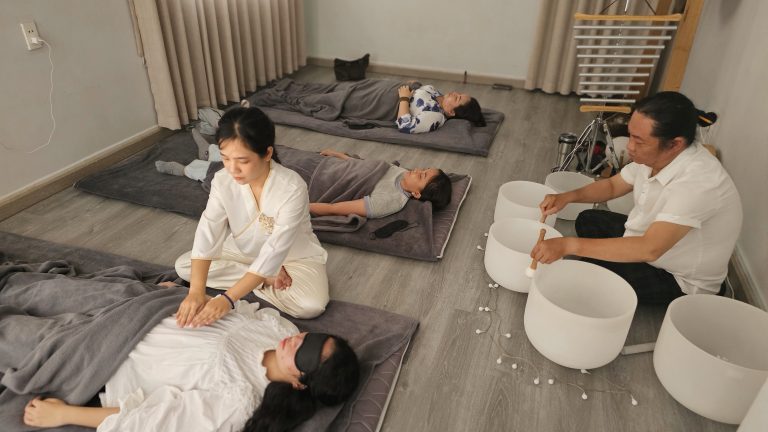
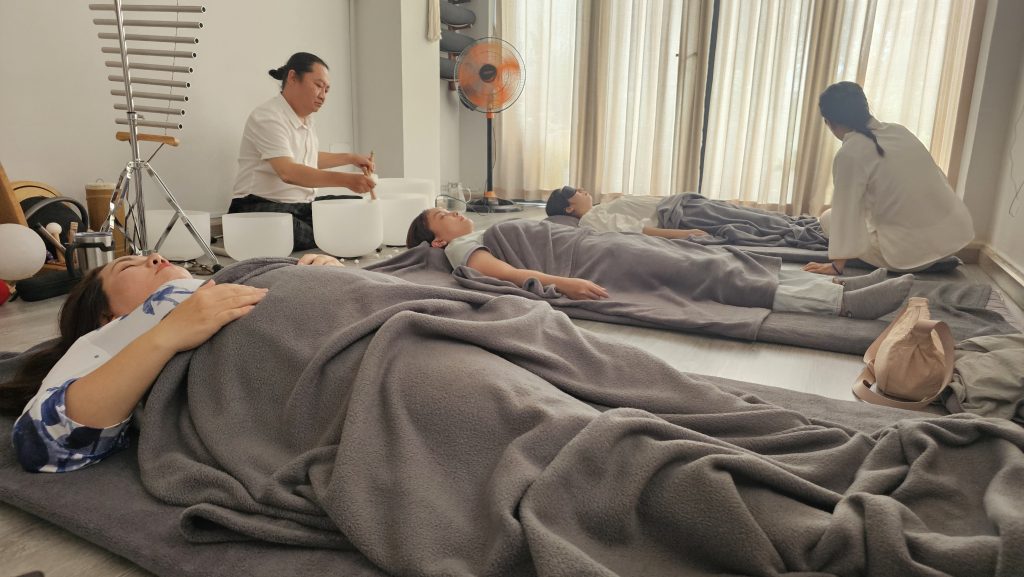
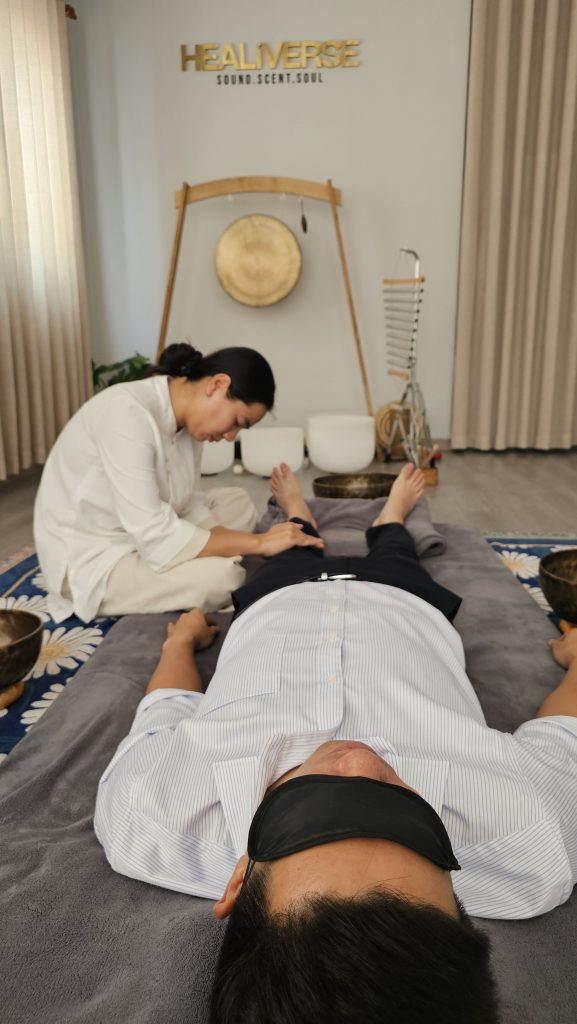
A sound bath brings many sleep-friendly conditions together: lying still, soft dim light, no phone, slower breathing with guidance, and long tones without words or busy rhythm for the mind to grab onto.
So falling asleep is very common, especially at midday and in the evening. Some guests say it’s the deepest short nap of their week.
Using sound at bedtime, sensibly
- Put screens away early. About 30 to 60 minutes before bed, keep your phone away from the bed if you can.
- Choose sound without words. Bowls, gong or slow relaxing music, at a low comfortable volume.
- Breathe slowly for a few minutes. Breathe in gently and breathe out a little longer, so your body slows down.
- Set a timer. Let the sound switch off after 20 to 30 minutes instead of wearing earphones all night.
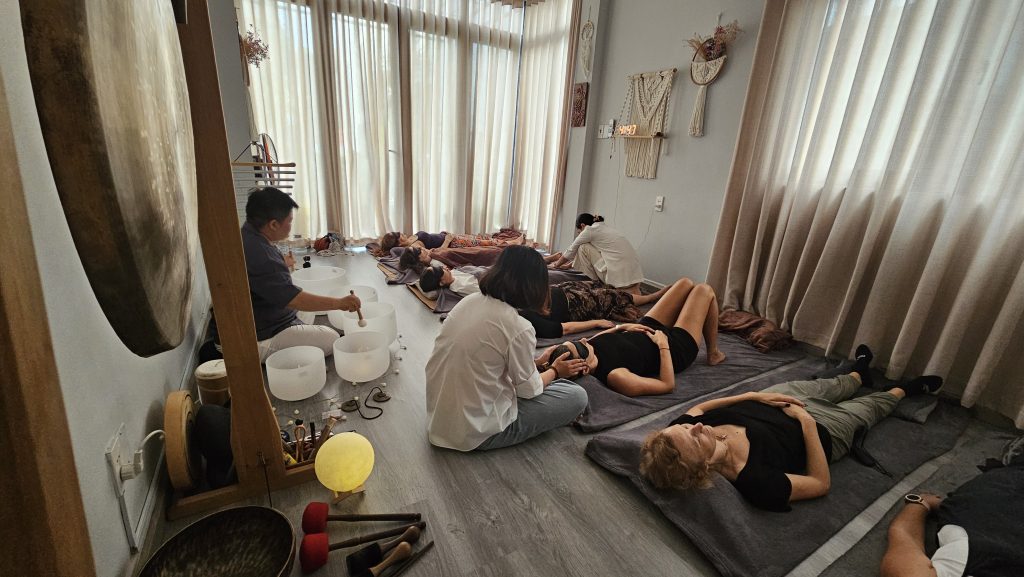
- Add an in-person session when you need it. An occasional live sound bath can give you deeper rest.
When to see a doctor
If poor sleep lasts for weeks, affects your work and health, or comes with loud snoring, pauses in breathing, ongoing anxiety or low mood, please see a doctor. A sound bath can be a pleasant pause alongside that, not the answer to every sleep problem.
Got questions? We’ve got answers
Can a sound bath cure insomnia?
No. There isn’t strong enough evidence to say sound baths treat insomnia. Many people find it easier to relax afterwards, but if poor sleep continues, please see a doctor.
Midday or evening session?
Midday suits a deep short rest in the middle of a workday. Evening suits heading straight to bed afterwards.
Is a private session different?
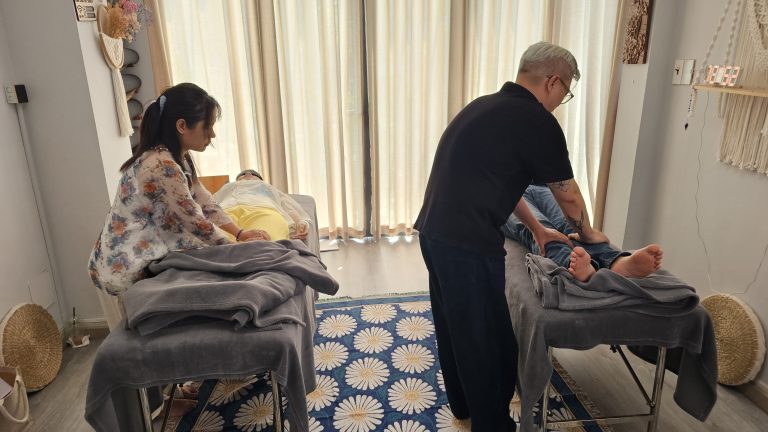
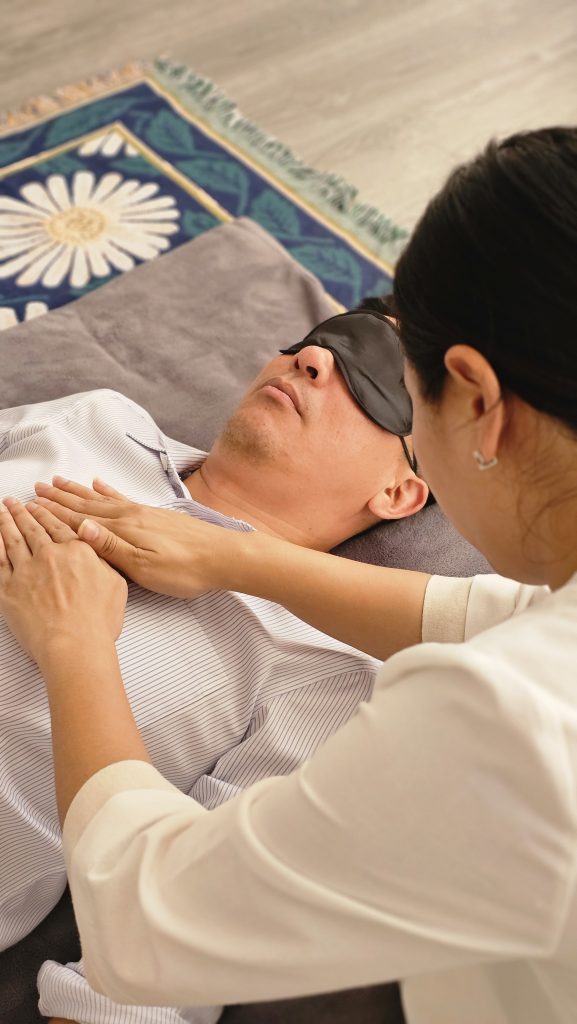
The 1:1 session includes Reiki, and the facilitator adjusts pace and volume for you. It suits sensitive sleepers or anyone who struggles to rest around others.
Is there something to listen to at home?
Yes. Our YouTube channel The Sound Healing has a Sound Bath Online series you can play softly before bed.
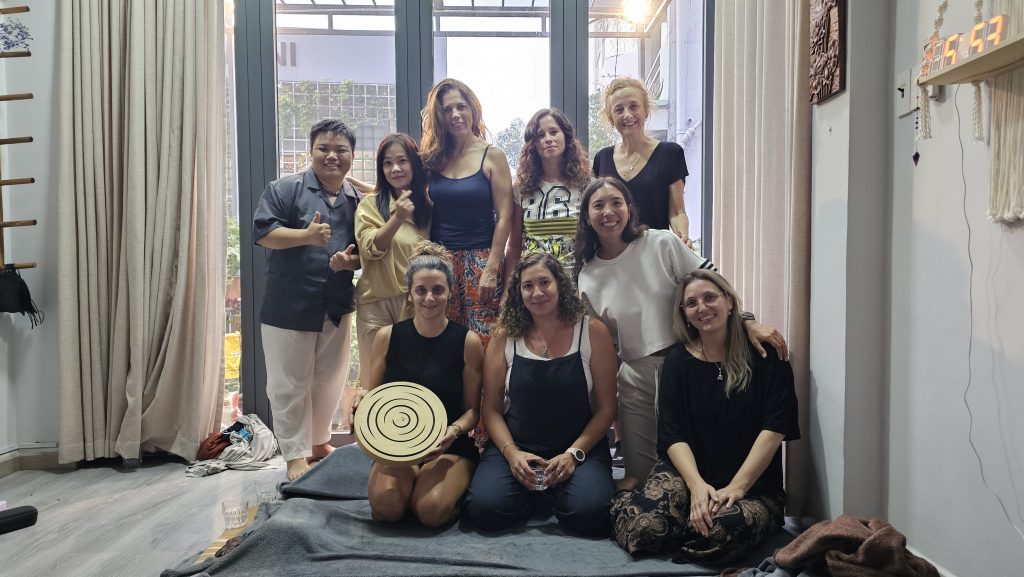
A deep pause for your week
Choose midday to recharge, evening to head straight to bed, or a private session with Reiki if you need complete quiet.
—
Book your session: www.thesoundhealing.vn
📍 104/20 Mai Thi Luu Street, Tan Dinh Ward, Ho Chi Minh City, Vietnam
Booking | Hotline | Zalo | WhatsApp
📞 English: +84 939 624 684 (Kennedy)
📞 Vietnamese: +84 906 502 582

HEALIVERSE – The Sound Healing is a sound healing studio in Tan Dinh, Ho Chi Minh City: sound baths, Reiki, meditation and singing bowl courses. Every session is a relaxation experience, not medical care.